
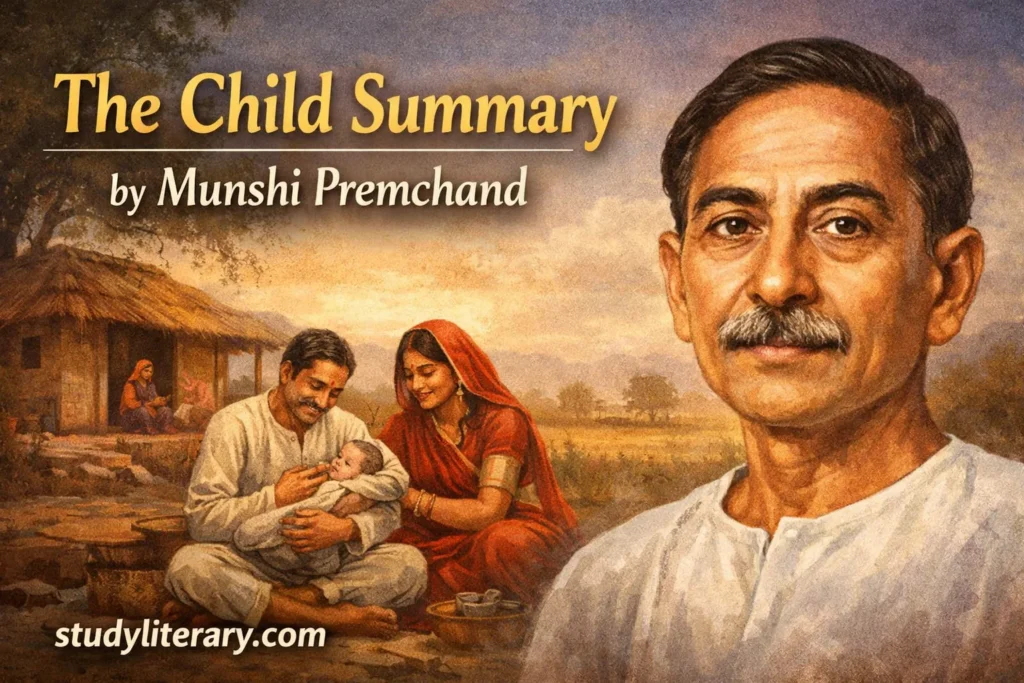
The story is narrated by an educated, upper-class man who introduces one of his servants, Gangu, a Brahmin by caste. Although Gangu is poor and illiterate, he takes immense pride in his Brahmin identity. Unlike other servants, he does not salute his master from a distance, refuses to touch utensils used by others, and avoids sitting with lower-caste workers. He is short-tempered and sensitive to criticism, believing that his caste grants him natural superiority. Ironically, he neither performs religious rituals nor follows traditional Brahmin practices. Yet he clings firmly to the prestige of his birth. The narrator sarcastically reflects that just as wealthy people claim inherited riches as their own achievement, Gangu also holds tightly to his inherited caste privilege.
The narrator describes himself as reserved and independent in his dealings with servants. He dislikes calling them for small tasks and prefers to do minor chores himself. Because of this habit, he becomes irritated when Gangu approaches him one morning without being summoned. He immediately assumes that Gangu has either come to request an advance salary or to complain about someone, both of which he strongly dislikes. However, to his surprise, Gangu hesitates nervously and finally asks to be relieved of his duties. The reason shocks the narrator: Gangu intends to marry Gomti Devi, a woman expelled from the Widows’ Ashram.
Gomti Devi has a controversial reputation. She had been married three times through the Ashram, but each time she left her husband within weeks and returned. Eventually, she was expelled and began living alone in the neighbourhood, becoming a subject of gossip and mockery. Society labels her as characterless and immoral. The narrator is astonished that an orthodox Brahmin like Gangu would choose such a woman. However, Gangu passionately defends her. He argues that the accusations against her are false and that her husbands must have failed to give her love and understanding. According to him, a woman does not need only food and clothing; she needs affection and emotional security. He also mentions that she suffers from illness and occasional fits. His defence reveals deep compassion, emotional intelligence, and belief in love over social judgement.
Despite claiming to be modern and liberal, the narrator’s hidden prejudice surfaces. He fears that keeping a servant who marries a socially condemned woman might bring trouble, scandal, or police involvement. Considering Gangu foolish and misguided, he accepts his resignation. This decision exposes the narrator’s hypocrisy and narrow-mindedness.
Five months later, the narrator learns that Gangu has married Gomti and now earns his living by selling chaat. Although he lives in poverty, Gangu appears surprisingly happy, confident, and contented. His face radiates satisfaction and peace. The narrator becomes curious about this unexpected happiness, almost treating Gangu’s life as a social experiment. He secretly envies the simple joy that Gangu seems to possess.
Soon, news spreads that Gomti has run away. The narrator feels a strange sense of satisfaction and vindication, believing his earlier doubts have proven correct. When he meets Gangu, he expects anger and humiliation. Instead, he finds him heartbroken but not resentful. Gangu insists that Gomti took nothing with her and blames himself rather than her. He continues to praise her virtues and declares his unwavering love. He resolves to search for her everywhere. The narrator is disappointed that Gangu refuses to condemn her, as this destroys his cynical expectations.
After some time, the narrator returns from a trip and sees Gangu holding a newborn baby with immense joy. Gangu explains that he found Gomti in a hospital in Lucknow, where she had given birth. He brought her back along with the child. Upon calculating the dates, the narrator realizes that the baby was born in the sixth month of their seven-month marriage, clearly implying that the child was conceived before the marriage. He mocks Gangu and questions the child’s legitimacy.
However, Gangu responds with extraordinary calmness and sincerity. He declares that the child is his because he married Gomti out of love and accepts her past completely. He uses a powerful metaphor, saying that if one takes a sown field, one should not reject the harvest merely because someone else sowed it. This statement reveals radical forgiveness and unconditional acceptance. For Gangu, fatherhood is not defined by biology but by love and responsibility.
This moment profoundly transforms the narrator. His sarcasm and prejudice collapse before Gangu’s moral greatness. Overwhelmed with emotion, he embraces the child with genuine affection. He admits that his goodness was only superficial, while Gangu possesses true nobility of heart. The story ends with the narrator acknowledging that real humanity lies not in education, caste, or social respectability, but in compassion, forgiveness, and unconditional love.
Life and Works of Munshi Premchand
Munshi Premchand (1880–1936) was one of the greatest writers of modern India. He is often called the “Upanyas Samrat” (Emperor of the Novel) because of his powerful novels and short stories. He wrote mainly in Hindi and Urdu and is remembered for showing the real life of common people with honesty and sympathy.
Premchand was born on 31 July 1880 in Lamhi, a small village near Varanasi (in present-day Uttar Pradesh). His real name was Dhanpat Rai Srivastava. His childhood was full of hardship. His mother died when he was young, and he had a difficult relationship with his stepmother. His family was poor, and he had to struggle for education. Despite these difficulties, he loved reading and gradually developed an interest in writing.
He began his career as a school teacher and later became a deputy sub-inspector of schools. During the British rule, he wrote his early works in Urdu under the pen name “Nawab Rai.” However, when his collection Soz-e-Watan was banned by the British government for its nationalist ideas, he adopted the pen name “Premchand.” Influenced by Mahatma Gandhi and the freedom movement, he later resigned from his government job to devote himself fully to writing.
Premchand’s writing focused on social realism. He did not write about kings or fantasy worlds. Instead, he wrote about farmers, labourers, women, widows, poor families, and the middle class. He showed social problems like poverty, caste discrimination, child marriage, dowry, exploitation of peasants, and the suffering of women. His language was simple, natural, and close to everyday speech, which made his stories powerful and easy to understand.
Some of his most famous novels include Godaan, which is considered his masterpiece. It tells the tragic story of a poor farmer named Hori and shows the harsh realities of rural life. Another important novel is Gaban, which deals with greed and moral weakness in middle-class society. Nirmala highlights the problem of child marriage and the suffering of women. Sevasadan discusses the life of women forced into prostitution and questions social hypocrisy.
Apart from novels, Premchand wrote more than 300 short stories. Some well-known stories include Kafan, which shows extreme poverty and human helplessness; Poos Ki Raat, about a poor farmer’s struggle against cold and hunger; and Idgah, a touching story of a little boy’s love and sacrifice for his grandmother. His short stories are deeply emotional and reveal the psychology of ordinary people.
Premchand’s writing style is realistic, simple, and deeply moral. He believed literature should serve society and bring awareness about injustice. He did not preach directly, but through his characters and situations, he made readers think about right and wrong. His works create sympathy for the poor and question social cruelty.
Munshi Premchand died on 8 October 1936, but his influence remains strong. He is considered a pioneer of modern Hindi and Urdu fiction. Even today, his works are studied in schools and universities because they reflect real Indian life and universal human values. His stories teach compassion, equality, and moral courage. Through simple language and powerful themes, Premchand became the voice of the common people and one of the greatest literary figures in Indian history.
Themes of The Child by Munshi Premchand
True Humanity vs Social Respectability:
A major theme in “The Child” is the contrast between genuine humanity and outward social respectability. The narrator is educated, cultured, and considers himself morally superior, yet he is deeply prejudiced and judgmental. In contrast, Gangu, though illiterate and poor, demonstrates extraordinary compassion, loyalty, and forgiveness. His acceptance of Gomti and her child reveals a depth of moral character that surpasses the narrator’s supposed refinement. Through this contrast, Premchand emphasizes that true goodness lies not in education or status but in empathy and kindness.
Social Prejudice and Moral Hypocrisy:
Premchand exposes the cruelty and hypocrisy of social judgement. Gomti Devi is branded immoral because she left three husbands, and society readily accepts gossip without attempting to understand her circumstances. Even the narrator, who claims to be modern and liberal, believes these negative stories. The story shows how society often pretends to uphold morality while lacking fairness and compassion. This theme criticizes how easily individuals, especially women, are condemned by rigid social standards.
The Redemptive Power of Love:
Love is portrayed as a transformative and redemptive force in the story. Gangu’s love for Gomti is sincere, unwavering, and free from selfishness. Despite her troubled past and eventual disappearance, Gangu continues to cherish her memory and search for her. His love does not weaken but becomes stronger through suffering. Premchand suggests that love has the power to rise above social stigma, heal emotional wounds, and elevate human character.
Forgiveness and Acceptance:
The theme of forgiveness reaches its peak when Gangu accepts the newborn child, even after realizing it could not biologically be his. Instead of reacting with anger or humiliation, he chooses acceptance. His metaphor of marriage as taking a “sown field” beautifully expresses his belief that love and responsibility matter more than biological ties. This theme highlights moral greatness through forgiveness and challenges conventional ideas of honour and pride.
Illusion of Intellectual Superiority:
The story challenges the belief that education guarantees wisdom. The narrator initially views Gangu as foolish and naïve due to his lack of literacy. However, Gangu’s emotional intelligence, ethical clarity, and humane outlook prove far superior to the narrator’s cynical reasoning. Premchand critiques the arrogance of the educated class and reveals that moral insight and sensitivity are not dependent on formal education.
Critique of Patriarchal Judgement:
Through Gomti Devi’s character, Premchand critiques patriarchal attitudes toward women. Gomti is judged harshly and denied dignity because of her past, while little attention is paid to her emotional needs or suffering. Gangu’s defence—that a woman needs love, not merely food and clothing—questions traditional male assumptions. The story highlights how women are often unfairly blamed and stigmatized in a male-dominated society.
Transformation and Self-Realization:
By the end of the story, the narrator undergoes a profound moral transformation. Witnessing Gangu’s unconditional love and acceptance forces him to confront his own prejudice and hypocrisy. He realizes that his goodness was only superficial, while Gangu possesses true nobility. This theme underscores the possibility of self-realization and moral growth through humility and reflection.
Character Sketches
Gangu
Gangu is the most remarkable character in the story, representing true humanity and moral greatness. Though he is an illiterate servant, he possesses deep emotional wisdom and compassion. As a Brahmin, he displays pride in his caste and maintains a sense of dignity, refusing to behave like other submissive servants. However, beneath this pride lies a sensitive, loving, and generous heart. His decision to marry Gomti Devi, despite her damaged social reputation, reveals his courage and independence of thought. Gangu’s most extraordinary quality is his capacity for unconditional love and forgiveness. Even after Gomti runs away and later returns with a child conceived before marriage, Gangu accepts both her and the baby without resentment. His metaphor of marriage as taking a “sown field” reflects profound moral insight. Gangu ultimately emerges as the ethical center of the story, proving that true nobility lies in kindness, loyalty, and acceptance rather than education or social status.
The Narrator
The narrator is an educated, upper-class man who initially appears rational, modern, and humane, but gradually his inner prejudices are exposed. He considers himself independent and fair-minded, yet he harbors strong social biases, especially regarding caste and female morality. His reaction to Gangu’s proposed marriage reveals his hypocrisy: despite claiming liberal values, he judges Gomti harshly and dismisses Gangu’s decision as foolish. The narrator’s sarcasm, cynicism, and hidden envy of Gangu’s happiness demonstrate his moral limitations. However, he is not a static character. By the end of the story, Gangu’s extraordinary forgiveness profoundly transforms him. Confronted with genuine goodness, the narrator experiences shame and self-realization, admitting that his goodness was merely superficial. His emotional response to the child symbolizes his moral awakening. Thus, the narrator represents the flawed but redeemable human being who learns humility through experience.
Gomti Devi
Gomti Devi is a complex and tragic character shaped by social judgement and misunderstanding. She is introduced as a woman expelled from the Widows’ Ashram after leaving three husbands, which earns her a reputation for immorality. Society views her as characterless, but Premchand subtly challenges this perspective. Through Gangu’s defence, readers see another side of her story — that she may have suffered from loveless marriages and emotional neglect. Gomti’s actions suggest vulnerability rather than wickedness. Her disappearance indicates inner conflict, possibly driven by guilt or fear when she realizes she is pregnant. Although she is physically absent for much of the story, her presence influences the emotional and moral journeys of both Gangu and the narrator. Gomti represents women who are condemned by rigid social standards without compassion or understanding.
The Child
The child, though silent and symbolically presented, plays a crucial role in the story’s meaning. The baby represents innocence, purity, and the possibility of moral renewal. He becomes the catalyst for revealing Gangu’s extraordinary humanity and for transforming the narrator’s outlook. In accepting the child without concern for biological paternity, Gangu elevates the concept of fatherhood from blood ties to love and responsibility. For the narrator, the child becomes a symbol of truth that shatters prejudice and awakens compassion. Thus, the child embodies hope, unconditional love, and the triumph of humanity over social conventions.
Important Links
Share
- Facebook
- Twitter
- Linkedin
- Whatsapp
- Pinterest
- Telegram