
Table of Contents
ToggleYou can download the previous year question papers in main page of contents under Sem1 → ACE 1 → Question papers. The link of main page of content is given below under important links.
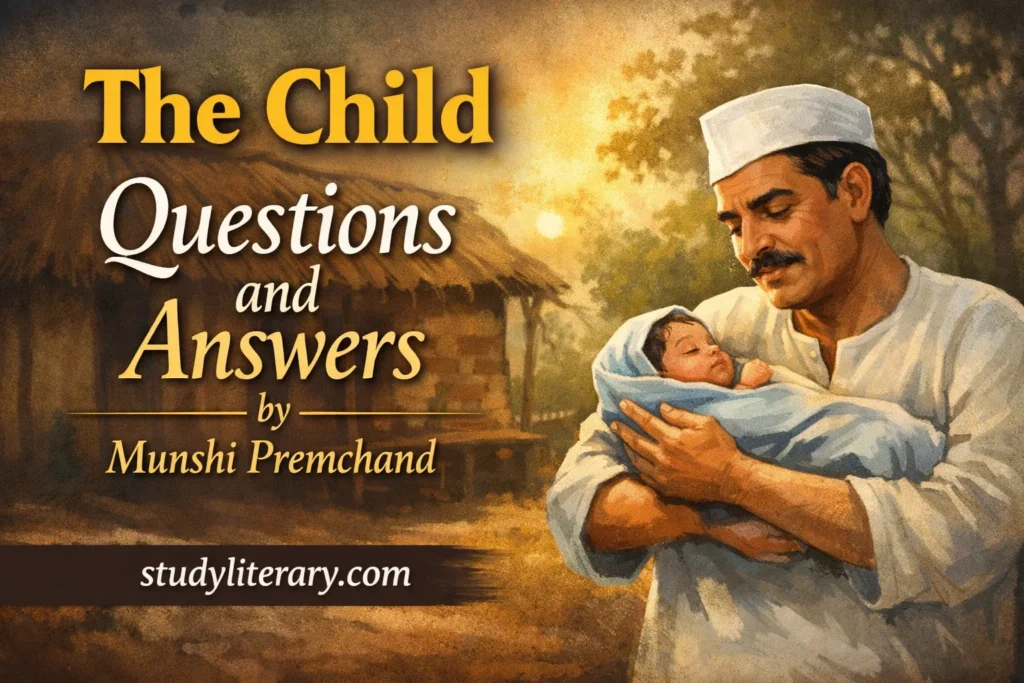
The Child Questions and Answers by Munshi Premchand
Who is Gangu?
A Brahmin servant of the narrator.What is Gangu’s caste?
Brahmin.How does Gangu behave differently from other servants?
He does not salute and maintains caste pride.Why does Gangu refuse to salute the narrator?
Due to his sense of Brahmin dignity.What quality of Gangu surprises the narrator most?
He has no addiction to bhang.Is Gangu literate or illiterate?
Illiterate.Does Gangu perform religious rituals?
No.How does the narrator describe his behaviour toward servants?
Reserved and independent.Why does the narrator dislike servants approaching him uncalled?
He finds it irritating.What does the narrator assume when Gangu approaches him?
That he wants money or to complain.What request does Gangu make?
To be relieved of duties.Why does Gangu want to resign?
To marry Gomti Devi.Whom does Gangu wish to marry?
Gomti Devi.Who is Gomti Devi?
A widow expelled from the Ashram.From where was Gomti expelled?
Widows’ Ashram.How many times had Gomti been married?
Three times.Why was Gomti expelled?
For leaving her husbands.How does society view Gomti?
As immoral.How does the narrator react?
With shock and disapproval.How does Gangu defend Gomti?
He calls the accusations false.What does Gangu say a woman needs?
Love.What illness does Gangu mention?
Possession-like sickness.Why does the narrator accept resignation?
Fear of trouble and prejudice.What work does Gangu take up?
Selling chaat.How much does Gangu earn?
About 8–10 annas profit daily.How does Gangu appear after marriage?
Happy and contented.What news does the narrator hear?
Gomti ran away.How does the narrator feel?
Secretly pleased.How does Gangu react?
With grief.Did Gomti take money?
No.Whom does Gangu blame?
Himself.What does Gangu feel for Gomti?
Continued love.What decision does Gangu make?
To search for her.Where does he find Gomti?
In a hospital.In which city?
Lucknow.What condition was Gomti in?
Ill and weak after childbirth.What does Gangu bring?
Gomti and a baby.How old is the baby?
One month.How long had Gangu been married?
Seven months.Why does narrator doubt child?
Born too early.In which month was baby born?
Sixth month of marriage.Narrator’s reaction?
Mockery and suspicion.Does Gangu reject the child?
No.What metaphor does Gangu use?
Sown field and harvest.Meaning of metaphor?
Acceptance beyond biology.What shocks the narrator?
Gangu’s forgiveness.What transformation occurs?
Moral awakening.Narrator’s emotional response?
Tears and affection.What does narrator admit?
His inner meanness.Who is morally superior?
Gangu.What value does Gangu represent?
Compassion and humanity.What social issue is highlighted?
Social prejudice.How is hypocrisy shown?
Through narrator’s attitudes.What is true morality?
Love and forgiveness.How is caste superiority challenged?
By Gangu’s moral greatness.What idea of love is shown?
Unconditional love.How is forgiveness portrayed?
Through acceptance of child.What does the child symbolise?
Innocence and renewal.How does narrator change?
Becomes humble and self-aware.Main message?
Humanity is greater than social norms.One trait of Gangu:
Forgiving.One flaw of narrator:
Prejudiced.Gomti Devi portrayal:
Misunderstood woman.Who undergoes growth?
The narrator.Who represents unconditional love?
Gangu.
Critical Appreciation of The Child
“The Child” is a powerful short story that reflects Munshi Premchand’s deep understanding of human nature and social reality. The story is simple in structure but rich in meaning. Through the characters of Gangu and the narrator, Premchand presents a strong contrast between social respectability and true moral greatness.
One of the most striking features of the story is its realism. Premchand does not create dramatic or artificial situations. Instead, he presents ordinary people — a servant, his master, and a socially rejected woman. The events are natural and believable. The language is simple and direct, yet emotionally powerful. This simplicity makes the story deeply touching and meaningful.
The character of Gangu is the moral centre of the story. Although he is illiterate and poor, he shows extraordinary compassion, loyalty, and forgiveness. His acceptance of Gomti and her child, despite social stigma and biological doubt, shows the highest form of love. His metaphor of the “sown field” is simple yet profound, redefining fatherhood as responsibility and affection rather than blood relation. Through Gangu, Premchand shows that true nobility lies in the heart, not in education or caste.
The narrator, on the other hand, represents educated society. He believes himself to be modern and humane, but his hidden prejudice and sarcasm expose his moral weakness. His transformation at the end is one of the most important aspects of the story. When he witnesses Gangu’s greatness, he feels ashamed of his own narrow thinking. This moral awakening gives the story emotional depth and completeness.
Another important aspect of the story is its social criticism. Premchand questions society’s harsh judgement of women like Gomti Devi. She is labelled immoral without understanding her suffering. The story criticizes caste pride, social hypocrisy, and rigid moral standards. At the same time, it celebrates forgiveness, unconditional love, and humanity.
Symbolically, the child represents innocence, purity, and new hope. The baby becomes the turning point of the story, breaking the narrator’s prejudice and revealing Gangu’s true greatness. The ending is deeply emotional but not exaggerated. It leaves the reader with a feeling of admiration for Gangu and reflection about one’s own moral values.
In conclusion, “The Child” is a masterpiece of social realism. It teaches that true humanity is greater than social norms, caste identity, or intellectual pride. Through simple storytelling and powerful characterization, Premchand delivers a timeless message about love, compassion, and moral courage. The story remains relevant because it speaks directly to the human heart.
Attempt Free Quiz
Important Links
Share
- Facebook
- Twitter
- Linkedin
- Whatsapp
- Pinterest
- Telegram